Monday, September 26, 2011

Series of Encounters

 
Thesis Students at UPLB

On September 12th I was invited by members of a Graduate Seminar class, CED 299, under Dr. Carol Santillana, professor of community education at the College of Public Affairs, as resource speaker on the topic, how to write a thesis proposal.  Total number of students in the two-section class was 16, but I was informed by someone at the end of the seminar that there were about 80 who attended.  That’s surprising as seminars usually don’t get attended, even at UPLB.  It must be the topic.

Well, I enjoyed discussing the topic with the students, and I’m personally encouraged that more and more students are becoming much more interested in trying to understand why they have to do a thesis before they graduate from college. 


How did the students arrive at the idea of inviting me as resource person in their class to discuss the topic in writing thesis proposals?  I understand that many of the graduate students of UPLB today have a copy of my book, How To Write A Thesis Proposal.  They must have believed that they’ll get more from a seminar than from reading the book.  The book was essentially my lecture notes in a course, Introduction to Development Communication Research, which I put together and reproduced in mimeo form in 1984.  However, in early 1985, the UPLB-CA Publications Program selected it as one of the little books that it would publish in 1985.  When the book ran out of copies, I volunteered to do a revised edition, which came out in 1996, then a third edition in 2003.  The third edition went on three printings.

A few months ago, I thought I should update the book into a Fourth Edition.  While working on a possible 4th edition, however, I realized that the greater bulk of what I intended to add was not a logical part of the thesis proposal.  So I decided to do an entirely new book, a sequel to the book, How To Write A Thesis Proposal.  The tile of the new book is Writing Your Thesis, comprised of four parts.  The first part is substantially similar to the current book, but with substantial editing and additional material.  Part II of the proposed book deals with writing the thesis manuscript, which includes data analysis and interpretation, as well as data presentation using communication techniques such as use of visuals.  Part III is actually an expanded bibliography.  Part IV is simply titled Appendices, but it is very meaty, if I might say.  Five significant topics are expounded in full-blown articles included in the appendices as they could not be discussed logically in the main body of the book.  Part IV contains, for example, a sample review of the related literature, an outline of how to review a scientific report, full discussion of a systems theory-based methodology called problematique analysis, full-blown discussion of the issue of plagiarism, which has become endemic problem worldwide among students, and a discussion of how to get published in an academic journal.

The U.P. Open University shall publish the book.  It should come off the press by the first quarter of 2012, perhaps in time to be launched during the UPOU anniversary celebrations in February 2012.

***

 Honesty Coffee Shop at Panyesanan

There’s something going up at Panyesanan, that farm-garden in Bgy. Rizal in Lipa city, owned by retired UPLB-CHE Dean Flor Librero.  Last week Kuya Flor and Ate Aida dropped by LB so we had breakfast at our place.  This doesn’t happen frequently, so we took advantage of their visit to UPLB to have breakfast together. 

Kuya Flor says he’s renovating the “bar” at Panyesanan into an Honesty Coffee Shop, patterned after the popular Honesty Coffee Shop in Ivana, Batanes.  He says, “let’s teach the younger generation about the value of honesty by giving them opportunity to be honest first to themselves.”  At the new Honesty Coffee shop shall be a hot and cold water dispenser, an old Chinese porcelain bowl that shall contain coffee sachets (brewed coffee shall come later), and a jar where you can put your payment and get your change, if you wish to get your change.

No one is going to guard the coffee shop.  So, honesty is the best policy, still.  By the way, in the Honesty Coffee Shop in Batanes, there’s a note at the side of the entrance that says, “Our Guard is the Lord.”  Now, try to fool around with that kind of guard.  That signage will also appear in the Panyesanan Honesty Coffee Shop.  It will open for business on October 16th, Kuya Flor’s birthday.

***

 Ang Mapagsamantalang Ticycle Driver ng Los Banos

A few days ago, I tried to take a tricycle in front of the South Super Market to Bong’s Auto Supply in Maahas.  I had my car fixed there.  When I asked the tricycle driver how much it costs to Bong’s Auto Supply, he told me without blinking an eye, “Thirty-five po ang isang sakay dito.”  That means everytime you take a tricycle from there, it would cost P35, without regard for distance.  From the South Super Market, in front of the UPOU, to Bong’s is only about 600 meters.  That costs P35.  It takes only three minutes.  Earlier in the day, I took a tricycle from Bong’s to the gate of UPOU in front of the Soputh Super Market and I was asked to pay P20.

UPOU drivers told me, “masyadong magugulang ang mga tricycle driver dyan, sir.”  Of course, I didn’t take a tricycle ride to Bong’s because I just hitched on a UPOU vehicle that happened to be going the direction of Bong’s that time.  What I don’t understand is, these tricycle drivers are actually making it extremely expensive for those who have less budget to ride tricycles, especially if they have some things to bring home like groceries and the like.  I would have thought that the tricycle drivers would actually help their neighbors economize a little bit.  But no, they’ll get all they can from anyone, mostly the poor since those who can better afford don’t ride in tricycles; they have cars.

So, you’re willing to pay P35 for only 600 meters of the national highway that should take even less than three minutes?  I’d say, sumubasob sana kayong mga mapagsamantalang mga tricycle drivers!

***

 What's Your Choice for a Profession?

Have you heard this message from the media lately?  “Magtrain na lang kayo maging Pinoy hilot sa halip na mag-aral ng nursing.  Mas malaki ang sweldo ngayon ng hilot.”  Now this has very serious implications that the government officials who have been mouthing this line could ever imagine.  Why this line of thinking? 

What’s appalling is that this message originated from government officials.  I’m taking this as a demonstration of their inability to provide jobs for the citizens of this country.  Very pathetic, indeed.  The more serious point that I’m concerned about is degradation of Filipino human values.  Being a Nurse is being a professional recognized the world over, and being manghihilot is essentially having a sideline. 

Don’t get me wrong.  I have nothing against the manghihilot.  I engage the services of a manghihilot regularly because I prefer the hilot to the synthetic-sounding “therapeutic massage” that’s provided by a “therapist.”  However, we should not tell our people to become manghihilot simply because today they might be getting a little more pay compared to the nurses.  Those who wish to become hilots, by all means go ahead.  TESDA provides good training in Pinoy Hilot.  Those who wish to pursue nursing as profession must, however, be encouraged and supported by the government.  Today, more than ever, we need nurses to provide better professional health services to our people.  Let’s provide our population some dignity in their chosen professions, not mere sideline.

By telling the larger Filipino public, particularly the younger generation, “mag-aral ka na lang ng Pinoy hilot kaysa nursing.  Mas malaki naman ngayon ang kita ng hilot,” we are telling them not to dream beyond being a hilot.  Is this what P-Noy wants us to dream when he said, “ngayon, pwede nang mangarap?” 

###

Monday, September 5, 2011

Certain Times, Certain Issues

 
Just the other day, Jegs and I attended the wake of her Auntie Gloria in Sta. Cruz, Laguna.  The wake was at the small chapel of Sto. Angel, one of the Barangays of Sta. Cruz.  We got there about 9 a.m., so there were very few people.  When we got there, Jegs’ other Auntie, Purita (who happened to be Jegs’ godmother) right away started sobbing on Jegs’ shoulders.  Of course, this was not time to be absolutely happy, even if logically one should because a loved one has ceased suffering.  Anyway, after a couple of minutes of inquiry, Jegs apparently started talking to her Auntie about internment possibilities.  Naturally, burial has been scheduled in the next  few days.

Nevertheless, Jegs seemed to have subtly brought up the concept of cremation to her Auntie Purita, who appeared to have become interested.

Both Jegs and I believe in the concept and practicality of cremation, so we know what to do when the other goes.  In fact, we do have two chambers (spaces) in a columbarium in Los BaƱos.  But I’m digressing.  I’d like to share some information with readers regarding cremation as an option.


What’s Cremation?

For the uninitiated, and from a technical point of view, cremation is the process of reducing a dead body to basic chemical compounds in the form of gases and bone fragments, according to Wikipedia.  The place to cremate (burn) dead bodies is called crematorium or crematory, which is actually a furnace that generates  very high temperatures, normally from 870-980oC.  To produce this heat, a crematorium utilizes electricity or gas.  Modern furnaces, or crematoria, have sophisticated controls that ensure clean burning and have automatic monitors  of the cremation process.  Normally the body burns at the rate of 45 kg per hour.

Wikipedia tells us that cremation dates back about 20,000 years based on archaeological evidence found at Mungo Lake in Australia.  Similar archaeological evidences have been found in the Middle East and Europe, dating back to the Early Bronze Age (c. 2000BC).  Then, during the Iron Age (which came after the Bronze Age), inhumation, or the practice of burying the dead, became common practice once more.  Still, cremation didn’t completely disappear, until finally Christianity frowned upon it during the 5th Century mainly through the influence of Judaism and Christianity’s attempt to abolish the Graeco-Roman pagan rituals.  When inhumation was a general practice, cremation was sometimes used as part of the punishment for heretics (recall your European history when witches were burned at the stakes?).


Cremation in Modern Times

According to Wikipedia, cremation once more became popular when in 1873, Professor Brunetti presented a cremation chamber at the Vienna Exposition. A year after, in 1874, Queen Victoria’s own surgeon, Sir Henry Thompson, together with his colleagues, founded the Cremation Society of Great Britain.  Then the first crematoria in Europe were built in 1878 in England and in Germany.  The first North American crematorium was built in 1876 by Dr. Francis Julius LeMoyne in Pensylvannia, while the second one was built by Charles Winslow in Salt Lake City on July 31, 1877.

Cremation was declared legal in England and Wales when Dr. William Price was unsuccessfully prosecuted for cremating his son toward the end of the 19th century, then followed by a series of events that led to the formal legalization of cremation.  These events included the first official cremation that took place in Woking, England in 1885, then about ten cremations took place in 1886, followed by the building of a crematorium in Manchester in 1892, and another one in Glasgow in 1895, then another one in Liverpool in 1896.  Finally, England passed the Cremation Act of 1902.

It is said that some protestant churches accepted cremation arguing that “God can resurrect a bowl of ashes just as conveniently as he can resurrect a bowl of dust.”  Still, the Catholic Encyclopedia of 1908 was critical of these efforts, referring to them as “sinister movement” and associating them with Freemasonry, even if said Catholic encyclopedia said “there is nothing directly opposed to any dogma of the Church in the practice of cremation.”  Finally, in 1963, Pope Paul VI lifted the ban on cremation, and in 1966 allowed Catholic priests to officiate at cremation ceremonies.

Today, crematories have largely improved.  In fact, there are crematories that are fully automated with PLC (programmable logic controller) touchscreens, where the weight and the name of the deceased have to be entered before the start-button is pressed (Wikipedia).


Your Ashes?

It’s not true that you’ll burn completely and what would be left of you are only ashes.  For the most part, your large bones wouldn’t burn completely.  In fact, there would be fragments of bones, while very clean and white, wouldn’t completely burn.  What they do is grind these pieces of bones until they look like fine sand.  These are the materials they deposit in small containers, like zip-lock bag, which is deposited in the urn.   When you are sure that you don’t like to see the container that holds the bone “ashes” anymore, seal the urn.  If it’s a marble urn, seal it with mighty bond or epoxy, and you’ll have it well kept in the urn.  You can bury the urn if you like to, or perhaps put it in a place where you can always see it, or even broadcast your “ashes” in the sea or perhaps in the atmosphere.  But the most common place to deposit the urn is in the Columbarium, or the house where urns are deposited in chambers, usually, a maximum of two urns per chamber.


Cremation is a Personal Thing

Cremation, I consider, is a very personal thing.  For Jegs and myself, we chose cremation for ourselves when the time comes for many reasons.  For example, for practical reasons, it is far cheaper than inhumation, or burial in the ground.  When I sold my lot in the Memorial Garden about 15 years ago, the rate during that time was P26,000 per lot of  4’x8’ and up to 6 feet under.  Now, if you want to, you can construct a tomb as well as  put a roof above.  Or, as in most Philippine cemeteries today, construct a family mausoleum.  All these can cost upwards to P500,000.  Cremation?  Just about P50,000.  And that already includes an urn made of brass or marble, and a chamber in the Columbarium.  There are a lot of reasons associated with cremation that  Jegs and I both like but which we rather not openly discuss.  Point is, we’ll let you be according to your own personal beliefs and preferences.

There is a psychological issue for me, personally, though.  Like, when buried you’d slowly decay and mix with the dirt beneath.  I can’t, and I won’t, imagine myself in that condition.  Too depressing to think of yourself as very dead and have rotted, mixing with the dirt underground.  In a beautiful urn, you’d look majestic all the time, especially when the urn stands next to a framed picture of you which has greatly benefited from Adobe Photoshop.

###

Friday, August 26, 2011

Hataw sa Kalikasan


There were two shows: gala at 2pm and matinee at 5:30pm at the UPLB Dioscoro L. Umali Hall, yesterday, 26 August, 2011.  In both shows, the DLU Hall was SRO.  No surprise about that.  It was Noel Cabangon’s concert for a cause, Hataw sa Kalikasan.  The gala show was for the general public, while the matinee show was exclusively for The Learning Place (whose students from Grade I-VI are called Earth Ambassadors).  Jegs and I attended the matinee show and got caught in the frenzy with the students of TLP running all over the place prior to the start of the concert.  It was actually TLP’s show, with Noel Cabangon as guest, one could say.  Well, the Directress of TLP, Ms. Veronica Quintana-Arioder,  is a neice of Mr. Cabangon.  I suppose that makes all the difference.  There is a very significant connect there.  But I’m digressing.

I’ve attended musical concerts before (I prefer the R&B and ballad types), but this was something I enjoyed.  It was full of energy.  I didn’t realize Cabangon is such a good concert artist.  I like the guy’s style.  He’s both good composer and performer.  “I was the only member of the family that went seriously into music,” he said.  He also emphasized that his music has a purpose.  Well, he’s an environmentalist.

I did not count, but he did perform quite a number of songs the great majority of which were environment-oriented.  One of the highlights of the show that I did like was Mr. Cabangon’s duet with Jong Sumangil, native of Los BaƱos – he’s currently Bgy. Kagawad of Batong Malake, Los BaƱos, and brother of the current vice mayor of the town.  His tenor voice was just right in combination with Cabangon’s in their rendition of Pagmasdan Ang Kapaligiran.  I’ve always loved that song, an original by the disbanded group called Asin in the 70s.

Since this matinee show was an exclusive show for the TLP, there was significant participation of students of this school.  The show was designed as a concert program with the participation of TLP students.  The entire show could be subdivided into the following: a video presentation with two TLP student-hosts annotating.  This video presentation was an environmental promotion show, through and through.  After the video show, lower grade students (Grades I-IV) performed environment-oriented songs.  Then the show went on to Jong Sumangil’s performance (two songs), and a sister-brother act of Nicole and Carlo, who did four songs (they were good).  Then the main show with Noel Cabangon.  The last portion was also a TLP dominated portion, but Jegs and I didn’t finish this portion anymore.

I was touched by the performance of the TLP students, together with Cabangon, of a song that he (Cabangon) specially composed for the kids to perform.  Things like that, to me, demonstrate the kind of values the man has.  Most likely, that was pro-bono.  That, to me, adds more significance to what an artist stands for.

In previous pictures of Cabangon that I’ve seen, he was clean cut.  During his concert at UPLB, he sported a mustache and beard.  I thought he looked artist-ty with it.  By the way, he has a lean but good band comprised of a lead guitarist, keyboardist, drummer, base guitarist, and a percussionist.  They were all very good.

To me, the only downside was the size of the DLU Hall.  It’s small for this kind of concert, therefore the accompaniment sound drowned the performers’ vocals for the most part.  Such kind of concert should have been done outdoors.  But, then again, they wouldn’t have been able to sell tickets would they?

Sponsors of Noel Cabangon’s Hataw sa Kalikasan Concert for a Cause at the UPLB Auditorium were the following:  The Learning Place (TLP) in cooperation with the UPOU Faculty of Management and Development Studies, UPLB School of Environmental Science and Management, and the UPLB Environmental Society.

The concert went very well, never mind the glitches in terms of disorganized management of the public prior to entrance to the concert hall. Since people who went to watch the Cabangon concert paid for the their tickets, they should have been ushered in the moment they arrived and not made to wait in line fronting an entrance door that also served as exit door.

Many of the volunteer ushers and usherettes were members of the UPLB Environmental Society, one of the co-sponsors, and they weren’t briefed on what to do by the TLP group, which was clearly calling the shots for the matinee show.  But, I guess, for those who paid to see the concert, it was worth it.

So, just the same, congratulations to the sponsors for such a good show.  The Los BaƱos community needs this every now and then.

###

Thursday, August 25, 2011

UPOU To Host ICODeL

UPOU Leads in ODeL Efforts

There’s a very significant growth point in the field of education, worldwide.  It is particularly of relevance to the educational concerns of the Philippines.  This is the area of open and distance electronic learning (ODeL).  While there exists an academic journal on the subject, the Open, Distance and e-Learning Journal, jointly published by the UK Open University of England and Routledge, an international publisher of academic books and journals, (signifying that there’s a continuously growing body of knowledge on the subject), there has not been an international conference undertaken to focus on ODeL.

Enter the UP Open University.

The International Conference on Open and Distance e-Learning (ICODeL), the first one on ODeL, shall be held in the Philippines on 23-24 February 2012, at the Century Park Hotel in Manila, and shall be jointly sponsored by the UPOU, UPOU Foundation, Inc., and the Philippine Society for Distance Learning, Inc. (PSDL).  Some 300 local and international delegates are expected to attend.

Two pre-conference sessions shall be undertaken on 22 February.  The first session shall be facilitated by Dr. Terry Anderson of Athabasca University  (Canada) and shall deal with open and distance e-learning research (frameworks, methods, and strategies).  The second session deals with technologies for open and distance e-learning, and shall be facilitated by Dr. Curtis Bonk of Indiana University (USA).

Open and distance learning are no longer new to Filipinos.  Similarly, e-Learning has become familiar strategy among Filipino educators and young Filipino learners as it is being employed as a delivery mechanism for educational materials that are part of the traditional or conventional education approach.  This means some of the lessons taught in the conventional mode are delivered online or made accessible through electronic means.  The fact is, e-learning can be part of either distance or conventional instruction, both of which can be open in terms of access characteristics. 

In the field of educational services, open access, for the most part, means minimal barriers to admission to curricular programs and other educational services.  For example, what would be good examples of barriers to admission to the curriculum?  Well, entrance examinations, high rates of fees, unnecessary additional fees or requirements not needed in mastering educational content according to the curriculum, and a host of other things.

Those interested in more information about this international conference in February may visit the website of the conference: http://icodel.upou.edu.ph.

***

Chawe Seeds in Itbayat, Batanes Have Great Potential as Cooking Fuel

There’s an exotic fruit whose seeds have potential as cooking fuel material.  This is the fruit of a hardwood species scientifically known as Ponetia pinnata.  This wild species grows in the pacific area.  In fact, it is also called Fijian longans.  This is a popular tropical fruit that Ivatans (people of Batanes) love to eat. Many trees of fruiting age are found in Panyesanan, the farm resort in Bgy. Rizal, Lipa City, owned by retired UPLB-CHE Dean Flor Librero  This tree is called chaye by the Ivatans (but specifically the island residents of Itbayat, Batanes call it chawe).
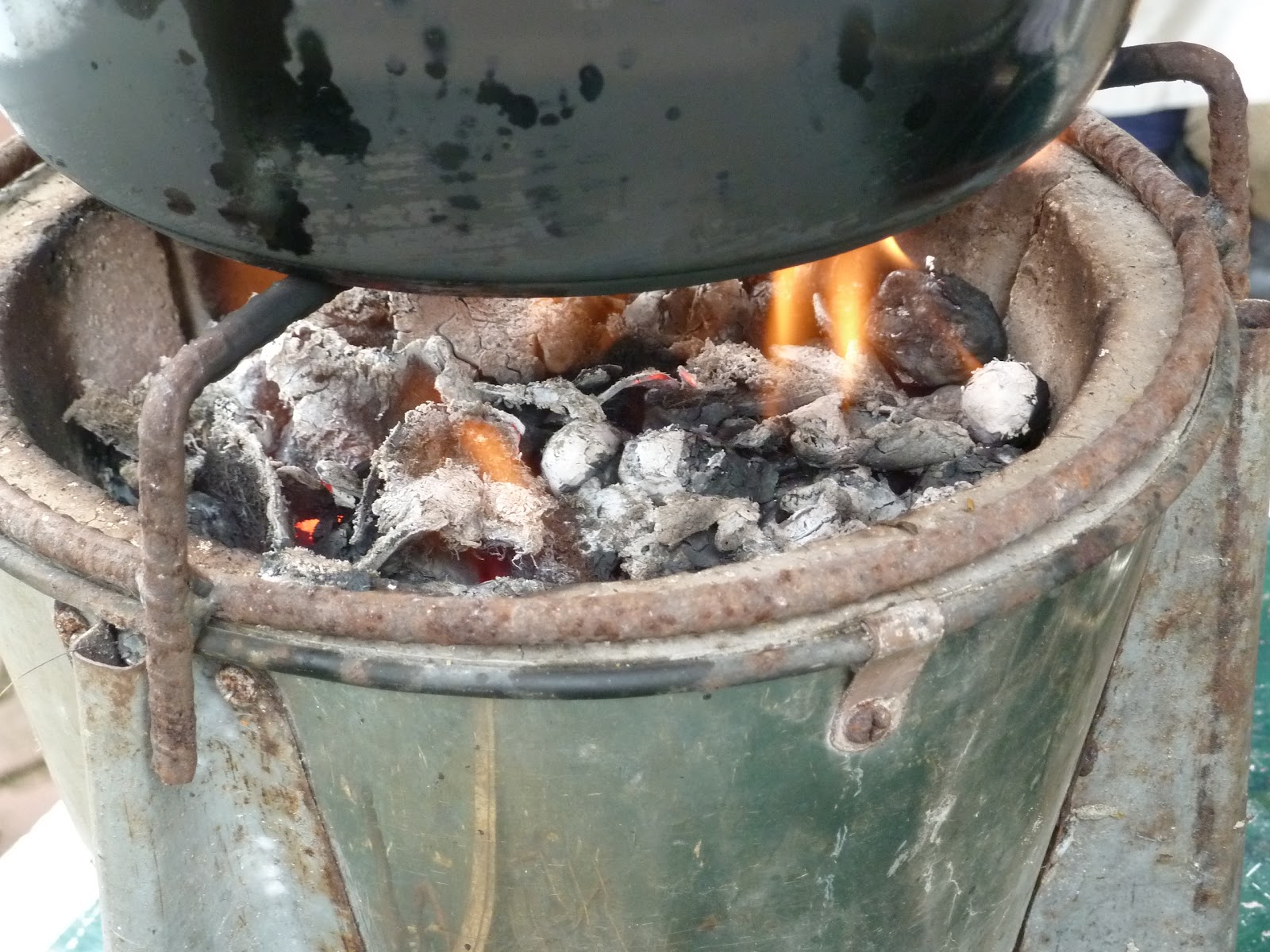
The fruit’s flesh is edible and the large seed has potential as cooking fuel.  Yesterday, Dr. Ernie Lozada, former UPLB vice chancellor for planning and development and retired professor of agricultural process engineering at UPLB,  successfully demonstrated that chawe seeds provide sustained cooking flame that’s very important in cooking.  Burning chawe seeds don’t smell and don’t produce too much smoke.

Dr. Lozada said, “I’m excited about this because it burns more uniformly compared to other fuels like fuel wood, charcoal, or coconut shell.”  These chawe seeds have great potentials as cooking fuel for the people of Itbayat, Batanes. 
Dr Lozada and Dr. Librero, currently consultant to Gov. Vicente Gato of Batanes, are preparing to make a demo presentation to the Batanes Governor, who, they hope, would welcome such an innovative use of chawe in Itbayat, Batanes.  Dr. Librero is visiting Itbayat next month to demonstrate how the chawe seeds can be used as cooking fuel.

###

Thursday, August 18, 2011

Brand-New UPLB Chancellor Soon


7 Vie for UPLB Chancellorship

One of seven UPLB Professors will become UPLB Chancellor on November 1, 2011.  This Professor must demonstrate impressive track record as academic manager, show acceptability to the community (meaning, UPLB), and whose vision for UPLB is aligned with that of UP President Fred Pascual’s vision for the UP System.  Since UP became a system with UPLB being the first autonomous campus in 1973, UPLB has had 7 Chancellors.  The incoming chancellor will be the 8th.  That individual shall be one of the following nominees:

From left: Dr. Rene Rafael Espino, Professor of horticulture, College of Agriculture; Dr. Eulogio Castillo, Professor of Credit cooperatives; and Dr. Vivien Gonzales, Director, Office of Student Affairs; Dean Domingo Angeles, College of Agriculture; Dean Rex Victor Cruz, College of Forestry and Natural Resources; Dr. Roberto RaƱola, Vice chancellor for Administration; Dr. Felino Lansigan, Professor of Statistics, College of Arts and Sciences.

Coming from the field of communication, I do have a biased view regarding the public presentations of the nominees’ respective vision for UPLB during the next three years.  I can say that the visions of the candidates were not really substantially very different from one another.  

 However, from an over-all communication point of view (especially, in terms of public presentation techniques), I would consider two candidates as stand outs.  I thought that the presentation of Dean Rex Victor Cruz was very organized, he was articulate, and his power point presentation was impressive.  

 Dr. Lansigan was articulate, as well.  This is hard to say because all nominees are good friends of mine and I don’t like to sound as if I’m supporting any one specifically.  Still, I think that my observations would reflect the observations of the majority of those in the audience present as demonstrated by the applauses given them.  I didn’t applause, by the way.

The one-hour open forum that followed the presentations was just enough for the nominees to respond to four general questions.  More than 100 questions were received from the floor by the open forum committee.  The nominees tried to respond as best as they could to the questions, but it was clear that they didn’t have enough time to think through the questions propounded to them.   I’m sure they would have to refine their respective responses when they get to think through the questions raised.  The other questions will be put to them during the interview with the Search Committee by the end of the month.

To all the nominees, good luck.

***

Road Widening in Laguna

For sometime now, road widening has been going on in Laguna.  The stretch from Calauan through Victoria and on to Pila, for example is now complete and the road is sufficiently wide.  It now looks like it’s a national highway.  That stretch is now effectivedly four lanes, but in some portions certain portions of the newly paved road are used as “garage” mostly by PUJs.

People complain of very narrow highways in the provinces.  Indeed, our roads are all narrow.  Narrower still are those in old towns that were constructed during the Spanish period when the only carrie4rs then were the horse-drawn rigs or kalesa.  

Road widening efforts, especially through towns built during the Spanish era can be very difficult because houses were constructed with one wall rising from the edge of the road.  This leaves no space for even a narrow side walk.

I do understand there’s a national law under the concept of eminent domain under which the national government can expropriate certain lands, like along roads, for government use particularly in road widening projects.  If I’m not mistaken, under the law, the government can expropriate private property to become part of the national highway, which is supposed to be 15 meters wide.   In the old towns, however, this could be difficult.  One would observe that towns which have been built after the law was passed have much wider roads compared to those built prior to the existence of the national highway law.

If this law were to be strictly enforced, government will have to deal with a very sticky problem.  In the first place, government is not even able to solve the problem of informal settling all over the country, particularly in urban centers, how much more for this kind of problem.

***

 By the way, along this stretch of national highway on the Calauan area is rising a branch of the popular eatery in Terona, Tarlac called Isdaan.  It’s been under construction for sometime now; it’s still being constructed.  Well, it’s large.  

 Certainly, there would be competition among the three eateries along that stretch of the national road.  For those who’ve been there, there are two other eateries, namely: Kainan sa Palaisdaan and Samaral.

***

An Old Trick That Always Works

A few days ago I bought some groceries from the South Supermarket in Los BaƱos.  As usual, when I buy groceries I’m always in a hurry, so when I was done I went to the counter as quickly as I could.  When the cashier was done, she asked me, “Is it all right if I don’t give you 15 centavos?  We don’t have coins.”  I was a bit irritated, but since I was hurrying out of the supermarket I said, “well since you’re programmed not give me 15 centavos I can’t afford to wait here the whole afternoon.” 

Sometimes they don’t give change up to 25 centavos, 10 centavos, but mostly 5 centavos.  Among busy shoppers, such little amount is not difficult to disregard, but it can pile up for the supermarket.  This is completely unlawful, unfair, unethical. immoral, and downright crazy.

###

Saturday, August 6, 2011

Significant Milestones

UPOU Faculty Congress

The First UPOU Faculty Congress was held last Thursday, August 4, 2011 at the UPOU’s Centennial Center for Digital Learning (CCDL) Hall in Los Banos.  Around 100 UPOU regular and affiliate faculty members from the three Faculties (of Education, Information and Communication Studies, and Management and Development Studies) were present.   

Theme of the Congress was “Teaching Effectiveness in an e-University in the 21st Century.”   This was part of a series of system-wide set of pre-investiture activities in preparation for the Presidential Investiture of UP President Alfredo E. Pascual sometime in September 2011.
                                Some 100 regular and affiliate faculty were present during the Faculty Congress.
Organizers of the Faculty Congress emphasized that the Congress was convened to provide UPOU faculty an opportunity for “collective critical reflection on what it means to be effective online educators.”  The Congress was conceived to enable UPOU faculty to “further develop their technological, pedagogical and content knowledge (TPCK) as online educators; and to critically apply as well as contribute to the scholarship of teaching in a digital age.”
                                          Dean Pat Arinto (FEd) explaining the objectives and mechanics
                                                   of the Faculty Congress.
There were four sessions had the following themes: becoming/being an effective online educator, engaging learners in a virtual classroom, assessing learning online, and identifying foci for a professional development program for online educators.

In her message, UPOU Chancellor Gigi Alfonso emphasized that UPOU is the trail blazer in ODeL because it’s the only institution in the Philippines that delivers all its courses online.  The concerns of ODeL, Chancellor Alfonso said, include the following:

1.    
1.   ODeL is actually transnational education (TNE), and UPOU is a major player.  This means that UPOU shall widen its sphere of influence beyond the 60 countries it now operates in.  Consequently, there shall be efforts at curricular innovation to highlight cultural contexts.

2.      An important ingredient in the ODeL efforts of UPOU shall be the radical course designs and delivery mechanisms.  The UPOU has been known for these and it shall continue to pursue such innovative approaches in the design and delivery of instructional services.

3.      UPOU shall continue efforts in creating knowledge through higher-order thinking, which is part of the ODeL framework.  Knowledge creation is now a current concern in educational philosophy.

4.      ODeL, as practiced at UPOU, provides an enabling environment for teaching effectiveness, which, for all intents and purposes, means a systemic blending of expertise through the blurring of the boundaries of the roles and functions of instructional designers, course writers, media specialists, educational measurement experts, language editors, and the like.

Chancellor Gigi pointed out that we need to be reflective educators who continue to be creative and innovative; who must be willing to unlearn old ways of doing things and adopt new and effective approaches especially in a learner-centered community.

UP President Pascual, from his end, sent his message but was not physically present because he was in Congress defending the UP budget.  He said, UPOU is the only open university in Asia that is essentially a graduate university.  And to continue its efforts at introducing innovations in field of educational delivery, we need to invest in IT infrastructure “if we have to succeed in e-learning.”  That sounded to me like a commitment.

President Pascual expressed hope that the UPOU shall provide the necessary training for all UP faculty in improving quality of instructional materials.  Of course, the response is definitely yes because this is one of the mandates of UPOU, to help improve not only instructional methods but materials as well that could be used by teachers in other HEIs in the country.

Unfortunately, I was unable to stay on in the Congress.  I had to go home after the first morning session because I had a very bad cough and onset of flu.  I could hardly walk, much less participate in the discussions.  As it turned out, I was down in bed for a couple more days.  Bed ridden or not, I had to prepare my notes for this entry, though.

***

Great Moment for Devcom

It doesn’t come frequently, but when it does it overjoys.  I’m referring to what is arguably one of the greatest moments for devcom academics, professionals, and practitioners worldwide.  Professor Nora Cruz Quebral, mentor of the major personalities in devcom (I hope I can qualify to be included in this group), will be awarded the honoris causa (honorary doctorate) by the London School of Economics shortly.  The process of selecting the recipient for an honoris causa award at the LSE is very complex and severely competitive.  When the final announcement came out of LSE, all of us who were part of the loop from the beginning of the nomination process were all relieved and thankful that the highly competitive process was over and that Nora, indeed, was the Awards Committee’s choice.

Dr. Quebral’s award is certainly a huge message to the world regarding her “passion for and huge contribution to the field of communication for development/development communication” (Manyozo, 2010).  By the way, to many social scientists worldwide, the LSE is the “star” of the social sciences and economics.

To Nora, mentor and role model, thank you for hammering into our heads in our younger undergraduate years at UPCA what a development communicator ought to be.

This is simply long past due.  Still, certain moments in life, particularly professional life, are worth waiting for.  What makes this event much more significant is that the award’s meaning goes way beyond the personal level.  I’d think Nora thinks that way.  I’d think Nora’s students think the same way, too.

***

Research Renaissance at PhilRice?

I ran into Dr. Dong Rasco, Jr. the other day and we exchanged pleasantries, which quickly led to his new assignment as PhilRice Director.  He’s upbeat about this assignment and seemed eager to begin serious research work in the country’s rice research agency.  I mentioned to him that our contemporaries at UPLB are all expecting for serious rice research coming back after quite sometime, to which he simply smiled and said, “let’s hope so.”

He sounded as if he was saying, this is a reasonable expectation and I can do this because at PhilRice, “there are a lot of good people there.”  When he got his call slip, he was just weeks into his Sabbatical Leave from UP Mindanao, no doubt, to write yet another book.  Well that sabbatical will have to be discontinued because a new responsibility has been assigned.  Snippets of the humble scientist’s professional priorities and habits.

"There are a lot of good people at PhilRice," is Dong's word of mouth today. Such comment, to my mind could mean an enabling research environment might be opening up at PhilRice?  So, to my friends at PhilRice, time to get down to brass tacks.

***

Congratulations to Yet Another Achiever
We’d like to congratulate UPLB Chancellor Luis Rey I. Velasco for being this year’s recipient of the Discoro L. Umali Medal for Most Outstanding Science Administrator.  This award is annually given by the country’s one and only science academy, the National Academy for Science and Technology (NAST).  If you’re a Filipino academic or scientist, you can say you’ve made it (or have arrived) if you make it even to just membership in the NAST.  Being an NAST Awardee, certainly is a few notches above the rest.

Chancellor Velasco, formerly Dean of the UPLB College of Agriculture, also used to be the Director of UPLB’s National Center for Microbiology and Biotechnology Research (BIOTECH).  The two-term Chancellor is a Professor of Entomology at UPLB.

Congratulations, again, Chancellor Rey.

***

Good Luck to the Thousands Who Took the UPCAT

These last couple of days,  August  7-8, 2011 (it's now Sunday afternoon in the Philippines), the UPLB Campus, like any other UP Campuses throughout the country, has been host to thousands of graduating high school students and their families.  Paraphrasing the great poet W.H. Auden, I'm sure that the reason why the young graduating high school students were here on campus was to take the UPCAT; why the others were here, I have no idea.  Serious business, indeed.   Two full days of exams is no joke.  The UPCAT, in fact, as many know, is the great separator of the grains from the chaff. 

On the average, there are at least 60,000 UPCAT takers annually.  And only 9,000-10,000 are taken in due largely to overcrowding in all the UP Campuses, except UPOU.  All the six other campuses of UP are residential campuses, while UPOU is an open university.  Today, UPOU has under 3,000 students (the majority are graduate students), but UPOU is preparing for greater numbers of students in the next five years.  Given UPOU’s online delivery of instruction through virtual classrooms instead of physical classrooms, it’s able to accommodate tens of thousands of students without having to construct physical classrooms all the time.

We believe that there’s always a limit to the capacity of UP to construct classrooms, and there, too, is a limit to the willingness of the tax payer to foot the bill for classroom construction every year.  Therefore, I do suggest very strongly that those intending to enter college, especially those interested in undergraduate training in the fields of media studies and education, might study carefully the option to pursue your studies in the distance mode.  (UPOU is now offering Bachelor of Arts in Multimedia Studies [BAMS], and Bachelor of Education Studies [BES]).  The same challenge is being hurled to those wanting to take their diploma  or master’s degrees.  To those wanting to earn their PhD (in education) or doctor of communication, the UPOU is prepared for you guys, any time.

Perhaps, UPCAT applicants in future might need to clearly specify in their applications forms that their preferred option in terms of campus should be the UPOU.

***

According to announcement on the construction site, this is how the Los Banos Centtro will look like upon completion.  It will compete with existing small businesses in the area, I'm sure.

###